 Posted by Wall Tools
We get to talk to a lot of drywall installers and finishers, and we pay attention to what they purchase from our shop. Some tools are absolutely necessary to get the job done. Other tools, while not necessary for completing the task, can make the job so much easier to accomplish.
We looked into what tools the drywall professionals rate as the most useful on the jobsite, and we are sharing them with you so you can make your drywall installation and finishing jobs a little easier. The best part is none of the tools that made the list will break the bank, and all of them are highly rated by our customers.
Cutting

One of the most useful tools on our list is also one of the least expensive. The Advance Adjustable Circle Cutter can cut out a perfect circle anywhere from 1inch to 16 inches wide. There are many different powered drill attachments that can do the same thing, but this simple tool has the advantage in almost every way.
- You won’t need to swap drill attachments for different hole sizes. Because this little tool is adjustable, you can cut any size round hole that you need – up to 16 inches wide.
- It creates less mess. Drill attachments create a lot of drywall dust when they cut, and that creates a hazard for you. This circle cutter makes the whole cut in a single pass, minimizing the amount of dust in the air.
- No power needed. You aren’t stuck if your battery dies, and you won’t have to wait for it to recharge.
Lifting
There is one tiny tool that will save you a ton of arm strength when you’re installing drywall sheets: a panel lifter. It might not seem like it, but a drywall panel lifter will save your arm and finger strength – especially on bigger jobs.

The Marshalltown Panel Lifter is the shop favorite because of the updated design. Most panel lifers are made of a single piece of metal or plastic, angled specifically to allow you to step on one end and lift the panel of drywall a few inches. But, Marshalltown upgraded the design by including a toe kick and strap, giving you much more control over the pressure you exert. Even though it is made of metal, they have included a textured foot surface to create a non-slip effect, making it safer to use on the jobsite.
If you aren’t a professional, but you need a drywall panel lifter for a do-it-yourself drywall installation job, we recommend the Marshalltown Panel Lifter with Bottle Opener. It works just as good as the previous model, but it includes a bottle opener for those breaks when you stop to contemplate all your life choices that brought you to this moment.

Measuring
One of the most challenging parts of drywall installation is finding the junction boxes behind the installed drywall. There are a couple of ways to do this, but the easiest and fastest way is to use a Plug Mark. A Plug Mark is a tool that you insert into the junction box (before you install the drywall) that allows you to easily locate and cut out the opening after the drywall is installed.
There are two common types of Plug Marks you’ll find in the field. One type has a sharp point on one end that punctures a hole in the drywall when it is placed on the wall, marking the center of the junction box. Another type of Plug Mark is a plastic rectangle with magnets that is inserted into the junction box. When the drywall is installed, you use the companion piece with the opposing magnets to locate the box. You can then trace the outside of the magnetic piece to cut out the box opening.
Finishing
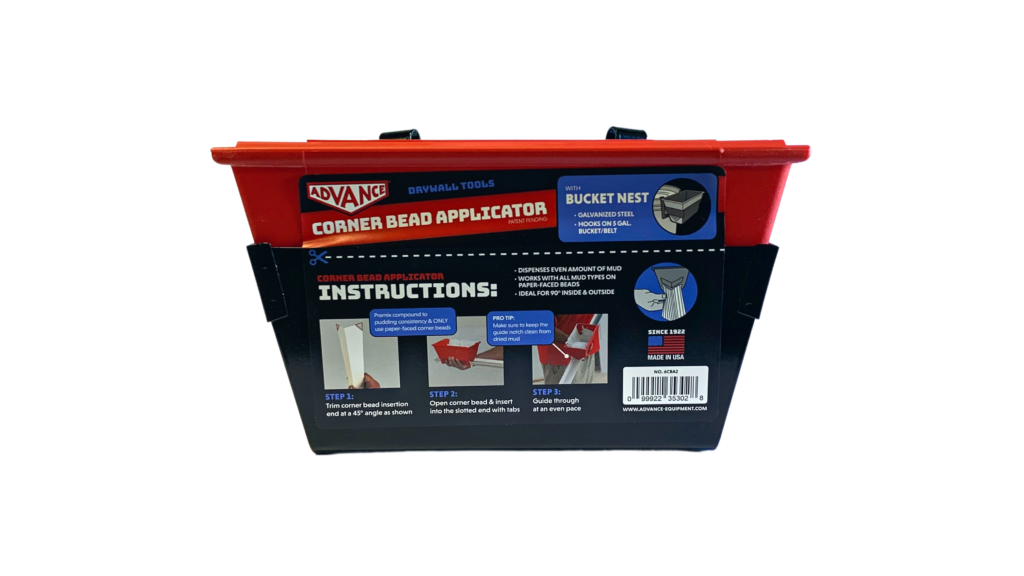
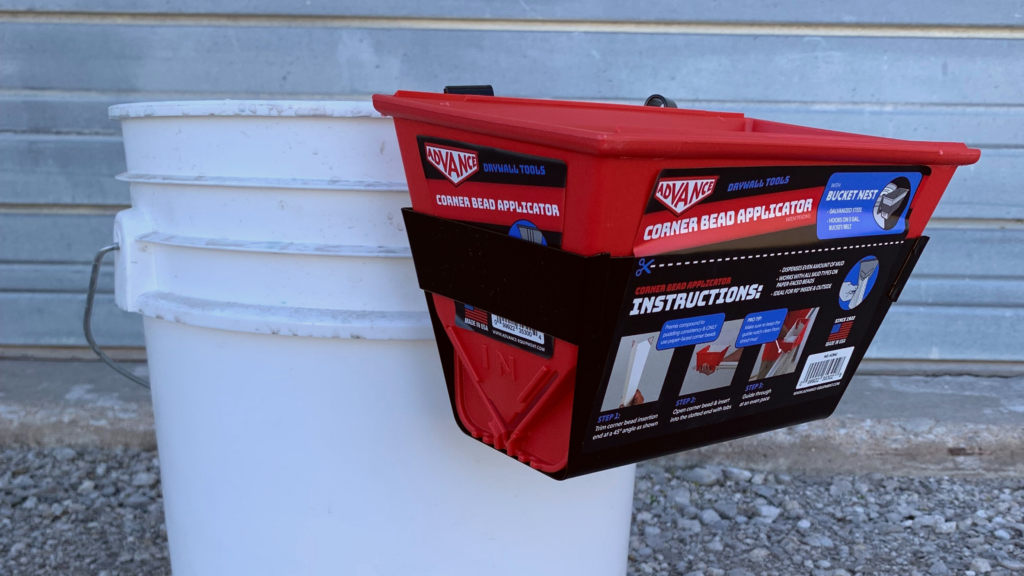
Corner bead installation is a common task for any drywall installation job, and there are a few ways to approach it. But, there aren’t very many tools designed to make the job go any quicker or easier. The one useful tool that consistently gets mentioned – and purchased – is the Advance Corner Bead Hopper Applicator Combo.
This tiny tool combo has some surprising results when it comes to time and effort saved on the job. Made of galvanized steel, it is the perfect tool for coating your paper-faced corner bead, whether you are working on inside or outside corners. This particular pairing also comes with the Bucket Nest, allowing you to carry the hopper on your bucket or your belt for easy access.